
Car Wash Insurance in South Jersey
Seven counties run 39 express tunnels between them, more than any other part of New Jersey, and the season at the bottom of the region pays for the year. NJ Car Wash Insurance, a Friedlander Associates Inc. agency based in Flemington, New Jersey and licensed in all 21 counties, quotes car wash insurance for South Jersey operators.
or call 908-824-6733 — a principal picks up.
- Principal cities
- Cherry Hill · Vineland · Egg Harbor Township · Deptford · Mount Laurel · Marlton · Atlantic City · Voorhees
- Counties
- Camden · Burlington · Gloucester · Salem · Cumberland · Atlantic · Cape May
- Corridors that matter
- The Black Horse Pike · the White Horse Pike · Route 70 · Route 38 · Route 42 · Route 55 · the Atlantic City Expressway · Route 47 through the Cape
- The market, in numbers
- 126 payroll establishments and 39 express tunnels — the most tunnel-dense region in the state. Express formats make up 30.8% of Camden County’s tracked locations and 25.0% of Burlington’s, against an average annual wage of $24,111 in Cumberland. BLS QCEW 2024, as republished by WashIndex.
- Who permits your discharge
- The Camden County Municipal Utilities Authority runs a single regional plant on the Camden waterfront; the Gloucester County Utilities Authority takes the Route 42 side; the Atlantic County Utilities Authority serves the shore end. Cape May’s municipalities run their own
- What we write here
- Express tunnels · flex-serve · full-service · in-bay automatics · self-serve bays · hand wash and detail · mobile detailing · fleet and truck wash · fuel and c-store sites
- Phone
- 908-824-6733
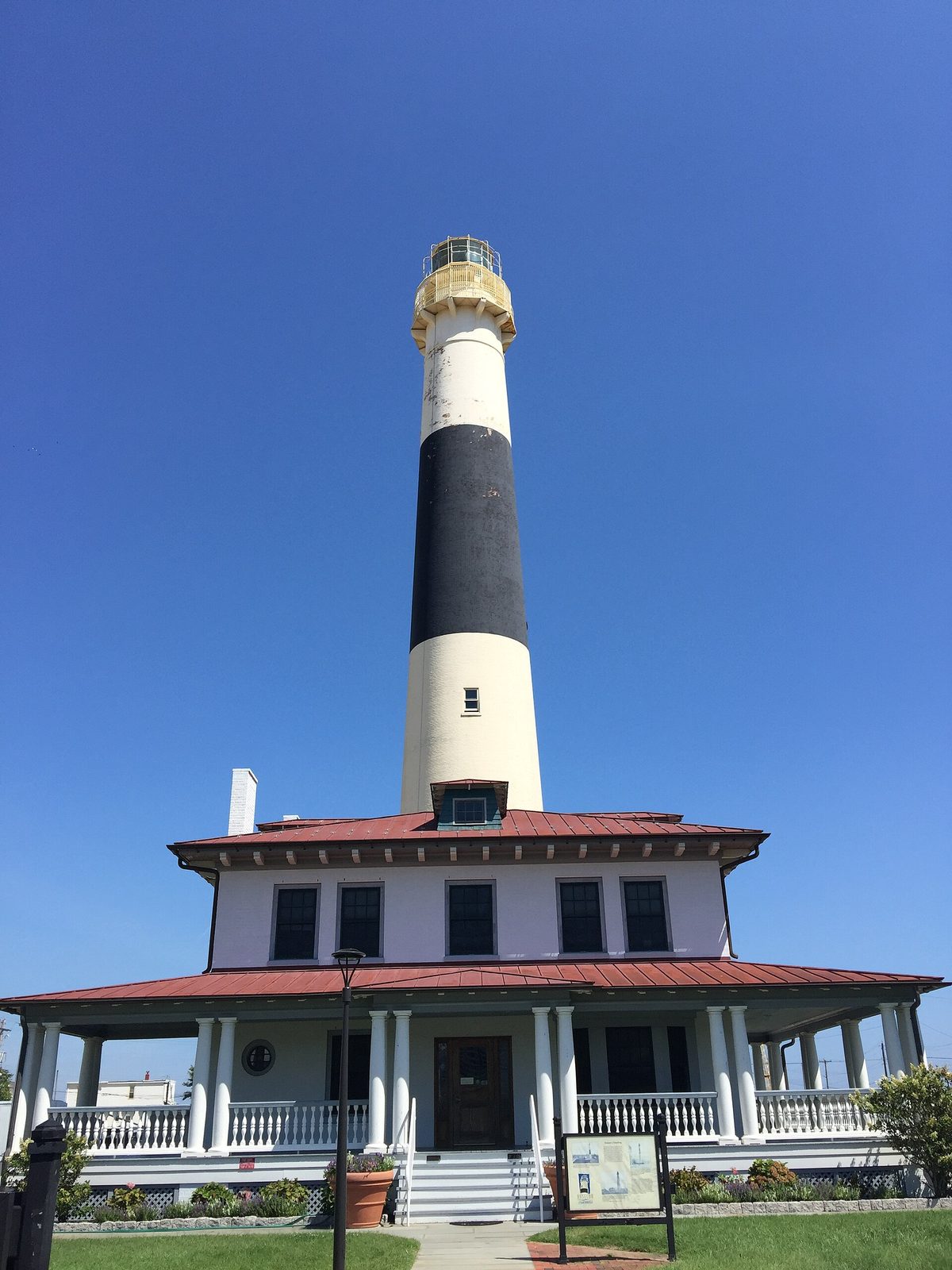
Fourteen weeks pay for the other thirty-eight
The bottom of this region runs a visitor economy, and a wash there earns a disproportionate share of its year between Memorial Day and Labor Day against a cost base that does not move. Cape May County alone recorded $8.1 billion in direct visitor spending from 12.11 million visitors in 2024 — 9.8% of all New Jersey visitors.
Three coverage consequences follow, and none of them are obvious. Business income limits set on an annual average will underpay a loss that lands in July. The indemnity period matters more than the limit, because a closure in season is not recoverable in November. And seasonal payroll changes both the workers compensation audit and the employment exposure that comes with hiring fast in May.
Is your business income limit set on an annual average, or on what July actually earns? Send the declarations page.
The most tunnel-dense region in the state
Thirty-nine express tunnels sit across these seven counties, and the express share is concentrated at the top of the region — 30.8% of Camden’s tracked locations and 25.0% of Burlington’s. Tunnel density is really membership density, because the unlimited plan is what makes conveyor volume work on wide highway frontage.
That concentrates two exposures on the same lot. Contact is the first of them: presoak, wrap brushes, arches, undercarriage spray, dryers — five points on every pass that can catch something already loose when the car pulled in. Then the recovery curve — when a conveyor stops you lose the washes and you lose the members, and members do not return on reopening day.
A lower wage base, and the same six-year reach
Car wash payroll in the southern counties sits well below the northern ones — Cumberland averages $24,111 a year — and that number does more work than operators expect. Three things move with it: the workers compensation premium, what an auditor can claw back if the class split was wrong, and what an unpaid-overtime claim is worth once the timesheets are examined.
In New Jersey a wage claim reaches back six years, not two, and the lookback does not scale with what you pay. Your class code here is CRIB 8396, published by the Compensation Rating and Inspection Bureau. Payroll allocation between the tunnel crew, the hand-service crew and office staff is worth checking against your last audit worksheet before the next one lands — and a seasonal roster, with crews starting and leaving through the year, makes that record harder to keep complete.
Salt air at the bottom of the region
Ask an operator on the bay side why the rust-inhibitor upsell moves in August and the answer is the air, not the road. That is observation rather than published research: we went looking for an authoritative, non-marketing source that quantifies salt-air corrosion on this coast and did not find one, so there is no figure here to quote.
The policy consequence is stateable without one. Revenue shifts into hand-applied add-on services, which moves payroll up the coverage stack and changes what an auditor should be told, and chemistry use concentrates at exactly the sites where the discharge question is already hardest. In Wildwood, Rio Grande and Ocean City that is a design question for the site before it is a coverage question for the policy.
One honest note on coverage of this region: Salem County has no tracked car wash data at all. It is in our footprint and in the county list above, and we will not write a market fact about it that we cannot source.
South Jersey car wash insurance questions
What's the difference between garage keepers legal liability and direct primary?
Fault, and who goes first. A legal-liability form pays only what you could be made to pay as damages, so somebody has to establish negligence — and tunnel damage often happens with no one at fault. Direct primary skips that question entirely and pays ahead of the customer’s own insurer. On a Black Horse Pike tunnel running summer volume, the version on your declarations page decides whether a trim claim is a two-minute conversation at the exit or a letter from an adjuster.
How much garage keepers limit should a car wash carry?
We will not print one, because a printed number would be wrong for most readers. The limit attaches to the location rather than to the car, and the form’s own guidance is that it should reflect how many vehicles are there and what they are worth. So do the count: tunnel, stack lot, vacuum court, everything on the apron at the busiest hour you actually have. On a shore weekend in August that figure bears no relation to the February one your limit was set against.
Does my insurance cover my unlimited wash club members if I’m closed for a month?
The washes you did not sell, yes. The members who cancelled while you were shut, only if somebody changed one setting. Standard business income keeps paying for 60 days after the repair period ends and then stops; the extended period of indemnity option replaces those 60 days with anything from 90 up to 730. Membership recovery is a re-acquisition curve, not a reopening date — and in a region where roughly a third of the tunnels are running unlimited plans, leaving that on the default is a decision, not an oversight.
Do I need separate insurance for the vacuums and pay stations, or is that just property?
Both, and the split is the point. Property covers them against external perils, but whether they were scheduled as building or as business personal property decides which limit has to carry them — and property forms exclude mechanical breakdown outright, so the pay-station controller destroying itself is an equipment breakdown claim. On a large vacuum court the schedule is usually the thing nobody has looked at since the site was built.
We also serve nearby
Car wash insurance in Central New Jersey and the Jersey Shore. Locally: car wash insurance in Cherry Hill, Vineland and Egg Harbor Township.
NJ Car Wash Insurance — Friedlander Associates Inc., 361 Route 31 South, Building E, Suite 1301–1302, Flemington, New Jersey 08822. Licensed in New Jersey; quoting car wash accounts in all 21 counties.
NJ Car Wash Insurance is a trade name of Friedlander Associates Inc. Agency NPN 5735331 · NJ Producer License 9725274.
Or call 908-824-6733 — a principal picks up.
$0 to quote. Zero pressure. No data sold to aggregators.