
Home → Regions → Central New Jersey
Car Wash Insurance in Central New Jersey
Central New Jersey holds 25 express tunnels across Middlesex, Somerset and Mercer, most of them strung along the Route 1 corridor. NJ Car Wash Insurance, a Friedlander Associates Inc. agency based in Flemington, New Jersey and licensed in all 21 counties, quotes car wash insurance for Central New Jersey operators.
or call 908-824-6733 — a principal picks up.
- Principal cities
- Edison · Woodbridge · Hamilton Township · New Brunswick · East Brunswick · Piscataway · Bridgewater · Princeton
- Corridors that matter
- Route 1 · Route 18 · Route 27 · Route 130 · Route 206 · I-287 · Turnpike exits 8A and 9
- Local risk factors
- Express-tunnel concentration on Route 1 · fleet demand around the 8A warehouse belt · a reviewer-reported Mercer damage rate roughly three times the national figure
- The market, in numbers
- 91 payroll establishments (Middlesex 46, Somerset 23, Mercer 22) against 118 tracked locations; 25 express tunnels; Middlesex employment of 416 jobs at an average annual wage of $41,769. BLS QCEW 2024, as republished by WashIndex.
- Who permits your discharge
- Middlesex County Utilities Authority takes most of the Route 1 and Turnpike belt; the Stony Brook Regional Sewerage Authority covers the Princeton side of Mercer; the Ewing-Lawrence Sewerage Authority and Trenton’s own system take the rest. Three districts along one road
- What we write here
- Express tunnels · flex-serve · full-service · self-serve bays · in-bay automatics · hand wash and detail · fleet and truck wash · fuel and c-store sites
- Phone
- 908-824-6733
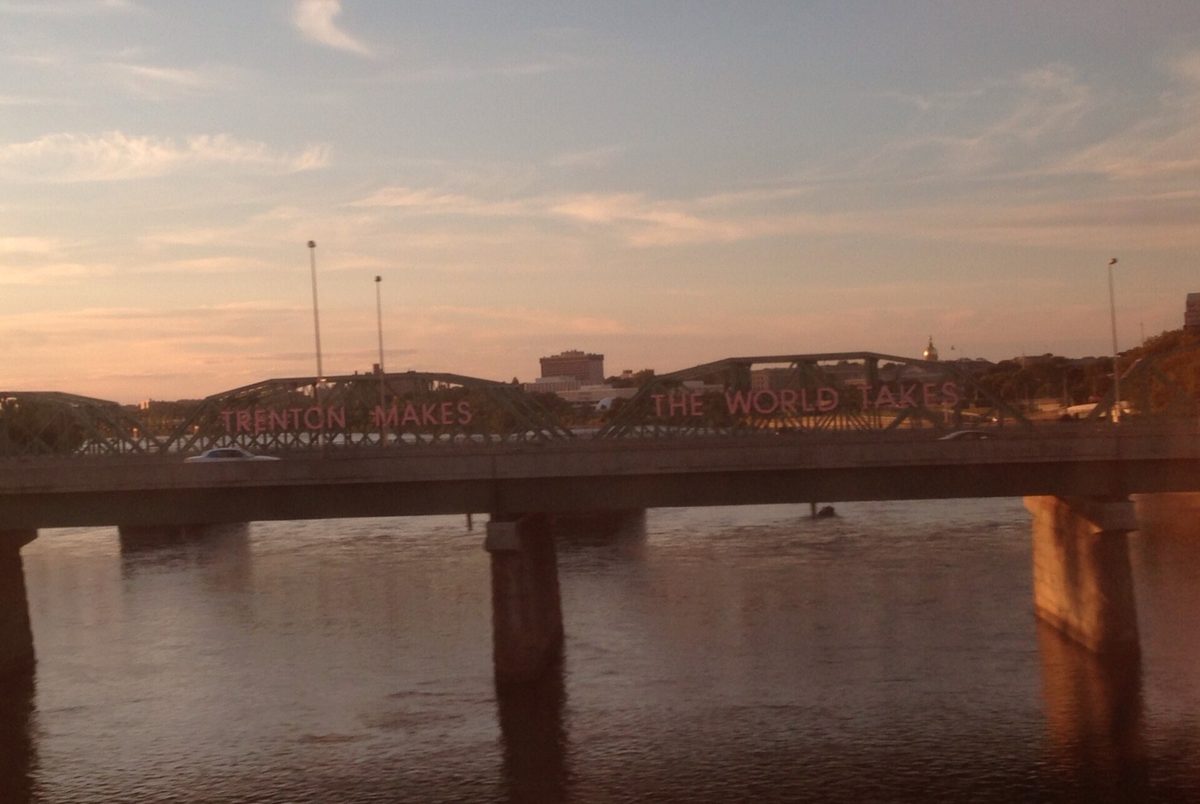
Twenty-five tunnels, and what a membership base does to a claim
Tunnel density here is really membership density — the unlimited plan is what makes conveyor volume work against Route 1 land costs. Start with contact. One pass puts the vehicle through five separate contact points, and what they reach first is not the paint but whatever sticks out from it — the mirror, the antenna, the roof rack and the trim that was already fatigued when the car arrived. WashIndex, which scores washes from customer review text, puts Mercer County at a 4.6% damage rate, roughly three times its national figure — reviewer-reported sentiment, not filed claims.
Then the recovery curve. A conveyor that stops in March costs you the washes and it costs you the members, and members do not come back on reopening day. That is a business income setting rather than a limit, and the default one is wrong for a membership wash.
Which of the three garage keepers bases is your endorsement written on? Send the declarations page and we will tell you in writing.
Route 1 in the morning, the Turnpike all day
The Route 1 corridor between Edison and Princeton is the business. Weekday-morning commuter throughput is what makes express economics work here, because express only pays at volume, and volume on this road follows the commute rather than the weather. Every extra car is another pass through the same brushes, which is why the per-event deductible cap earns its keep — one misaligned brush across a morning rush is one event or eleven deductibles, depending on wording nobody reads until afterwards.
The same geography carries the Turnpike 8A and 9 warehouse belt. Fleet work puts your people behind somebody else's wheel, which is commercial auto liability rather than garage keepers, and it brings a signed indemnity clause that garage keepers may not reach — the form excludes contractual liability unless the liability would exist without the contract.
Where the water goes in Middlesex, Somerset and Mercer
The permitting answer depends entirely on the destination, and it changes town by town across these three counties. Sewer discharge makes you an indirect user of whichever authority owns the pipe, and where that authority holds an NJDEP-approved pretreatment programme the permit is written locally rather than in Trenton. Three separate authorities operate along this corridor, and their pretreatment limits are not interchangeable — name yours and read its rules rather than assuming your neighbour's numbers.
Discharge to ground water means a NJPDES permit under N.J.A.C. 7:14A-7, whose application demands geologic mapping, a well inventory within a half-mile radius, borings, seasonal high water table and hydraulic conductivity testing. That is a hydrogeologic study, not a form. Septic is prohibited outright under N.J.A.C. 7:9A-1.6. Out toward Hopewell that is a siting question before it is an insurance question.
The March question
Salt season is why washes on Route 130 and Route 206 run their best volume in the worst weather, and it is why the business-income conversation here is not the one operators expect. New Jersey winters do not repeat themselves, so a wash budgeting from last winter is budgeting from a number with no reason to hold.
What that changes is a setting, not a sales pitch: the standard extension runs 60 days past the repair period unless somebody bought longer, and 60 days is the wrong number for a membership wash whose members churn while the doors are shut.
Central New Jersey car wash insurance questions
Is a customer’s damaged mirror covered by my general liability policy?
No, and the reason is one clause rather than a judgement call. Exclusion j., item 4 of the standard general liability form removes property damage to personal property in your care, custody or control, and a customer’s car sitting on your conveyor is the example the drafters had in mind. Garage keepers is the endorsement built for that gap — and it comes in three versions, only two of which pay when nobody was at fault.
What workers comp class code should a New Jersey car wash be on?
This state runs its own bureau. Classifications and rates come from the Compensation Rating and Inspection Bureau rather than from NCCI, and the phraseology you want to see is 8396, automobile car wash. Every national comparison site will describe this business under NCCI 8380 — a real code, for a different classification system, in other states. If a Middlesex or Mercer policy in front of you shows 8380, ask the question in writing and keep the answer.
Can New Jersey make me shut down during a drought?
Possibly, and the honest answer is that nobody can tell you in advance. The Phase I restrictions at N.J.A.C. 7:19-13.3 authorise a ban on washing vehicles and then carve out businesses engaged exclusively in car washing on site, including self-service washes with total recycle of both wash and rinse water. Read that carve-out twice: whether the recycling qualifier attaches to the whole exception or only to the self-service half is ambiguous on the face of the text, and we are not going to resolve it for you. What actually binds you is the order issued for the specific drought, not the Phase I language on its own.
Is soap or reclaim water going into a storm drain covered by my liability policy?
Not by that policy, no. Read your own chemical room against the pollution exclusion’s definition — any irritant or contaminant, with acids, alkalis and chemicals named by category — and high-pH presoak and acidic wheel cleaner are inside it before anyone argues. The exclusion then removes cleanup costs regardless of anything else in the form, while New Jersey’s Spill Act attaches liability strictly, jointly and severally, without a finding of fault. Along the Raritan, site pollution liability is the form that closes that gap.
We also serve nearby
Car wash insurance in North Jersey, Essex, Hudson and Union counties, Northwest New Jersey and South Jersey. Locally: car wash insurance in Edison, Woodbridge and Hamilton Township.
NJ Car Wash Insurance — Friedlander Associates Inc., 361 Route 31 South, Building E, Suite 1301–1302, Flemington, New Jersey 08822. Licensed in New Jersey; quoting car wash accounts in all 21 counties.
NJ Car Wash Insurance is a trade name of Friedlander Associates Inc. Agency NPN 5735331 · NJ Producer License 9725274.
Or call 908-824-6733 — a principal picks up.
$0 to quote. Zero pressure. No data sold to aggregators.