
Home → Regions → The Jersey Shore
Car Wash Insurance at the Jersey Shore
Monmouth and Ocean carry the highest share of independent car wash ownership in New Jersey — 75% and 73% — which means the person reading this usually signs the cheques. NJ Car Wash Insurance, a Friedlander Associates Inc. agency based in Flemington, New Jersey and licensed in all 21 counties, quotes car wash insurance for Jersey Shore operators.
or call 908-824-6733 — a principal picks up.
- Principal cities
- Toms River · Brick · Lakewood · Howell · Freehold · Neptune · Middletown · Eatontown
- Corridors that matter
- Route 35 · Route 37 · US 9 · Route 70 · Route 88 · Route 36 · the Garden State Parkway shore exits
- Local risk factors
- Coastal salt air and hand-applied add-on revenue · a fourteen-week season against a fixed cost base · a shallow water table on and behind the barrier islands · bridge-constrained access, so a closure on the island side has no easy substitute
- The market, in numbers
- 78 payroll establishments (Monmouth 46, Ocean 32) against 113 tracked locations; 20 express tunnels, twelve in Monmouth and eight in Ocean; Monmouth employment of 454 jobs at an average annual wage of $42,593 and Ocean 248 jobs at $34,632. BLS QCEW 2024, as republished by WashIndex.
- Who permits your discharge
- The Ocean County Utilities Authority takes most of Ocean through three regional treatment plants; Monmouth is split between the Two Rivers Water Reclamation Authority, the Northeast Monmouth Regional Sewerage Authority and several municipal systems. Your limits are set by whichever one your lateral runs to
- What we write here
- Express tunnels · flex-serve · full-service · self-serve bays · in-bay automatics · hand wash and detail · mobile detailing · fuel and c-store sites
- Phone
- 908-824-6733
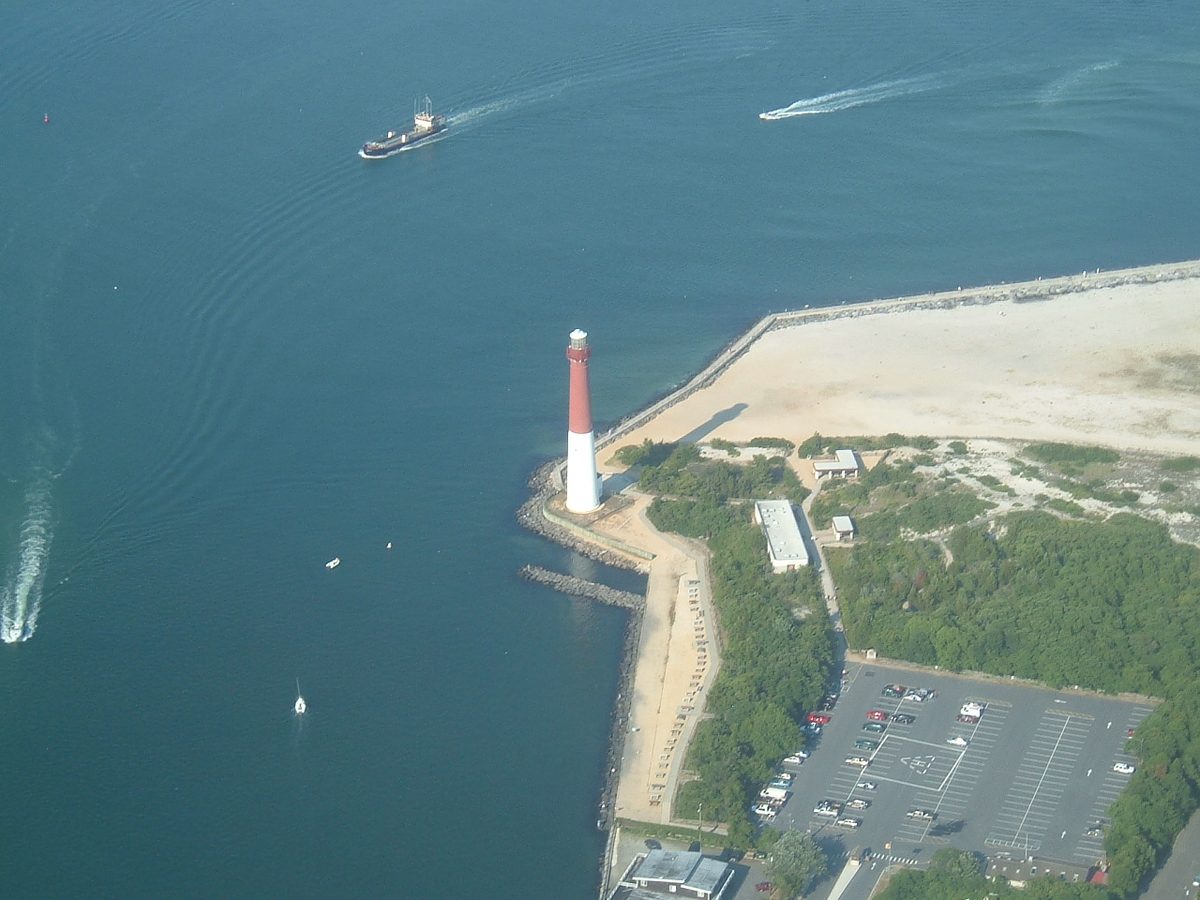
The air, not the road
Operators in Point Pleasant and Sea Bright will tell you the corrosion problem here is not the road, it is the air — and that undercarriage flushes and rust-inhibitor add-ons sell along this coast for reasons that have nothing to do with winter. We are repeating what operators observe, not quoting a study; we could not find an authoritative non-marketing source quantifying coastal salt-air corrosion, so we will not put a number on it.
What we can say precisely is what it does to the policy. It pushes revenue into add-on services applied by hand, which changes the classification conversation and moves payroll up the coverage stack, and it concentrates chemistry use at sites where the discharge question is already harder because of the water table.
A season’s worth of volume in fourteen weeks
A wash in Monmouth or Ocean earns a disproportionate share of its year between Memorial Day and Labor Day, against a cost base that does not move when the visitors leave. Three coverage consequences follow, and none of them are obvious. A business income limit set on an annual average will underpay a loss that lands in July, because the average is not what you were earning that week.
The indemnity period matters more than the limit does, because a closure in season is not recoverable in November — there is no second July. And seasonal payroll swings change the workers compensation audit and the employment exposure that comes with hiring fast in May.
Is your indemnity period still sitting on the sixty-day default? Send the business income section of the declarations page and we will read it back to you.
Twenty tunnels, and what a membership base does to a claim
The coast runs 20 express tunnels across Monmouth and Ocean, twelve and eight, and tunnel density here is really membership density — the unlimited plan is what makes conveyor volume work in a market that empties out in October. That concentrates two exposures on the same lot.
The equipment comes first: presoak, wrap brushes, arches, undercarriage spray and dryers are five contact points on a single pass, and any one of them can start a conversation at the exit. Then the recovery curve. When a conveyor stops in June you lose the washes and you lose members, and members do not come back on reopening day.
Where the water goes on and behind the islands
The permitting answer depends entirely on the destination, and it changes town by town. Send it to a sanitary sewer and you become an indirect user; where that authority operates an NJDEP-approved pretreatment programme, the permit is issued at county level rather than by the state. Out here that authority is usually the county rather than the municipality, and the pretreatment limits attached to a regional ocean-outfall plant are not the limits attached to an inland one.
Discharge to ground water means a NJPDES permit under N.J.A.C. 7:14A-7, and the application behind it is a hydrogeologic workup: mapping, every well inside a half-mile, subsurface borings, and a seasonal high water table reading that on a barrier island is usually the number that decides the whole question. Septic is prohibited outright under N.J.A.C. 7:9A-1.6. Where the water table sits a few feet down, that is a siting question before it is an insurance question.
Jersey Shore car wash insurance questions
I’m buying an existing car wash — do I need an ISRA cleanup before closing?
NAICS 811192 — car washes — is not on the ISRA subject list at N.J.A.C. 7:26B Appendix C, so a business whose operations are solely a car wash is not an industrial establishment by virtue of its code. Three things bring it back anyway: the parcel’s history, co-located fuel or repair operations, and the Spill Act, which has no NAICS gate at all. On a coastal parcel that was a marina service yard or a filling station before it was a wash, the history is the part to check first.
Is soap or reclaim water going into a storm drain covered by my liability policy?
Not under general liability. That form defines a pollutant as any irritant or contaminant, names acids, alkalis and chemicals, and excludes cleanup costs regardless of anything else in the policy. New Jersey’s Spill Act then imposes strict, joint and several liability without regard to fault. Where a storm drain runs to a tidal creek or a back bay, site pollution liability is not optional.
How much garage keepers limit should a car wash carry?
There is no published number worth repeating, because the answer is a calculation. The limit applies per location, not per vehicle, and the form’s guidance is that limits must reflect the number and value of vehicles at each location. Count the maximum that can be on your property at once — tunnel, stack lot, vacuums, overnight holds. On a Saturday in July that count runs well past what a February limit was sized for.
Does my insurance cover my unlimited wash club members if I’m closed for a month?
Partly, and the part that matters is a setting most policies leave on the default. Business income continues past the end of the repair period for 60 days unless somebody bought longer; the optional extended period of indemnity replaces that with 90, 120, 180, 365 and up to 730 days. A month lost in season is not a month you win back in a coastal market that thins out after Labor Day.
We also serve nearby
Car wash insurance in Central New Jersey, South Jersey and Essex, Hudson and Union counties. Locally: car wash insurance in Toms River, Brick and Lakewood.
NJ Car Wash Insurance — Friedlander Associates Inc., 361 Route 31 South, Building E, Suite 1301–1302, Flemington, New Jersey 08822. Licensed in New Jersey; quoting car wash accounts in all 21 counties.
NJ Car Wash Insurance is a trade name of Friedlander Associates Inc. Agency NPN 5735331 · NJ Producer License 9725274.
Or call 908-824-6733 — a principal picks up.
$0 to quote. Zero pressure. No data sold to aggregators.