
Home → Regions → Northwest New Jersey
Car Wash Insurance in Northwest New Jersey
New Jersey spread 238,480 tons of road salt in one recent winter and 82,129 the next — and nowhere feels that swing harder than the four northwest counties. NJ Car Wash Insurance, a Friedlander Associates Inc. agency based in Flemington, New Jersey and licensed in all 21 counties, quotes car wash insurance for Morris, Sussex, Warren and Hunterdon operators.
or call 908-824-6733 — a principal picks up.
- Principal cities
- Parsippany · Morristown · Flemington · Dover · Hackettstown · Phillipsburg · Newton · Sparta
- Corridors that matter
- I-80 · I-287 · Route 46 · Route 10 · Route 206 · Route 31 · Route 22 · Route 15
- Local risk factors
- The hardest salt season in the state and the least predictable one · large unsewered areas where the discharge answer is a hydrogeologic study rather than a form · long distances between sites, so a single closure has no sister location to absorb the volume
- The market, in numbers
- 53 payroll establishments across the four counties. Morris carries 262 jobs at an average annual wage of $33,064; Sussex’s tracked locations are roughly 90% detail shops. Job and wage data for Sussex, Warren and Hunterdon is withheld by BLS — we say withheld rather than estimating it. BLS QCEW 2024, as republished by WashIndex.
- Who permits your discharge
- Morris Township and the Route 10 corridor sit behind municipal and regional plants; the Musconetcong Sewerage Authority takes the Hackettstown side of Warren; and large parts of Hunterdon and Sussex have no sanitary sewer at all, which changes the question entirely
- What we write here
- Hand wash and detail · self-serve bays · in-bay automatic · express tunnels · flex-serve · full-service · fleet and truck wash · fuel and c-store sites
- Phone
- 908-824-6733
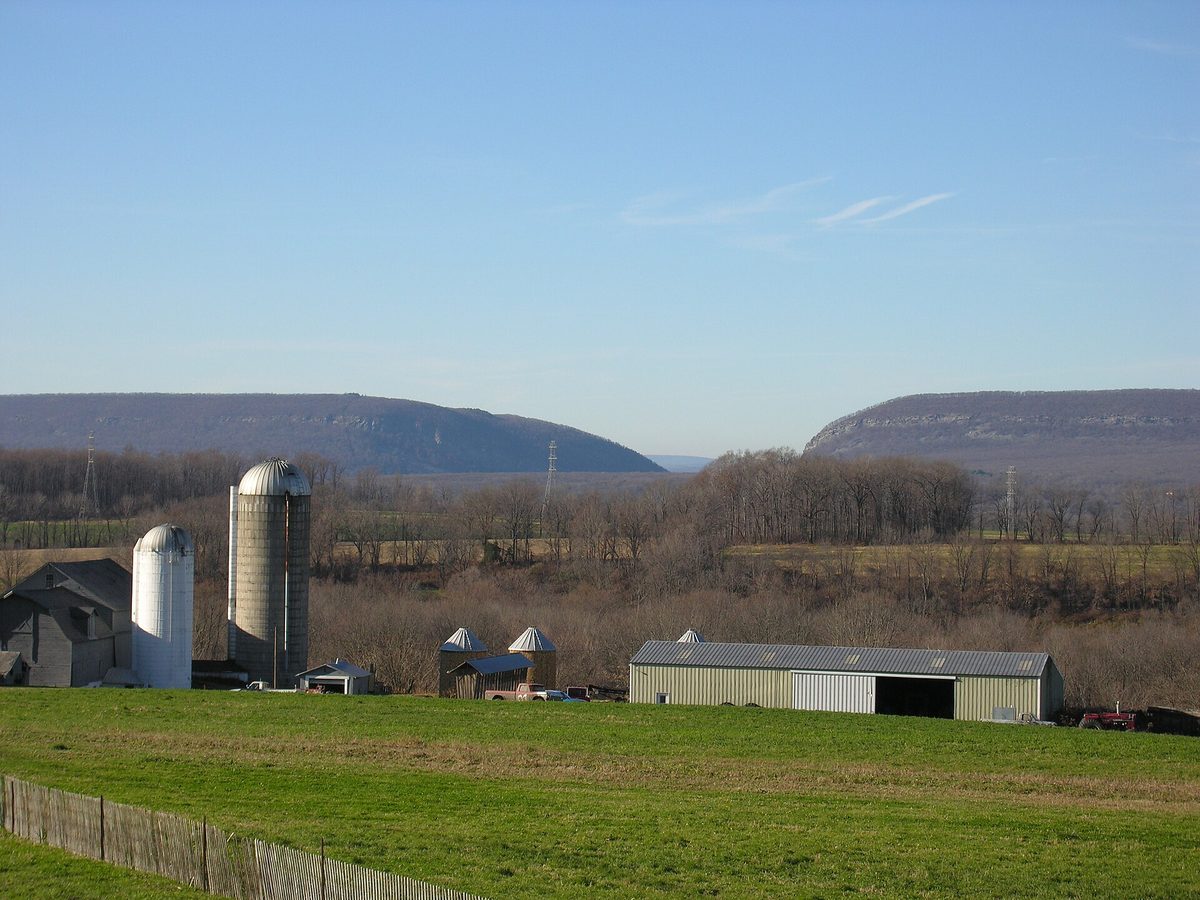
Salt season, and the March question
Salt season is why washes here run their best volume in the worst weather, and it is why the March business-income question is different in the northwest. New Jersey's winter spend swings hard from one season to the next — the state used 238,480 tons of salt and 427,180 gallons of liquid calcium chloride in 2021-22, and 82,129 tons the following winter. Roughly three times the material in consecutive years.
A wash on Route 46 or Route 10 that budgets from last winter's volume is budgeting from a number that has no reason to repeat. That volatility is not a slogan; it is the argument for how long your business income coverage should keep paying, and for how you set the limit. The standard extension runs 60 days past the end of the repair period unless somebody bought longer — and in a market where the earning season is compressed into the months you might lose, the indemnity period is the setting that matters more than the limit.
Is your business income indemnity period set for a winter that might not repeat? Send the declarations page and we will read the setting back to you.
Where the water goes, in unsewered country
This is the part of New Jersey where the discharge question stops being paperwork. Sewer is the simple answer and the one fewest sites out here get: where a municipal or regional authority takes your flow and runs an NJDEP-approved pretreatment programme, that authority writes your permit rather than Trenton. But large parts of Hunterdon, Sussex and rural Warren have no sanitary sewer to discharge to.
Discharge to ground water — a seepage pit, a drainfield, a dry well — means a NJPDES Discharge to Ground Water permit under N.J.A.C. 7:14A-7, and the application at 7:14A-7.9 demands topographic and geologic mapping, a well inventory within a half-mile radius, subsurface borings, seasonal high water table, background groundwater quality and hydraulic conductivity testing. That is a hydrogeologic study, not a form, and on a site surrounded by domestic wells the inventory alone can decide the project.
Septic is not an option. N.J.A.C. 7:9A-1.6(i) bars discharging industrial wastes to an individual subsurface sewage disposal system without a treatment works approval or NJPDES permit, and 7:9A-1.6(j) bars the administrative authority from approving such a system at all. A car wash on a septic-only lot has a siting problem, not a paperwork problem — and in these four counties that sentence describes a great many lots.
Payroll, and the arithmetic underneath it
Morris County car wash payroll runs 262 jobs at an average annual wage of $33,064, and roughly nine in ten of Sussex County's tracked locations are detail shops — a labour-intensive format on a comparatively modest wage base. That combination decides three numbers at once: the comp premium, what an auditor turns up if the class split is wrong, and what six years of thin timesheets are worth to a plaintiff.
In New Jersey your class code is CRIB 8396, published by the Compensation Rating and Inspection Bureau. Payroll allocation between the wash crew, the detail crew and office staff is worth checking against your last audit worksheet before the next one lands. That is an audit conversation, not a claim — but a six-year wage lookback makes it an expensive one to get wrong, and seasonal hiring in a snow month is exactly when records get thin.
Northwest New Jersey car wash insurance questions
If my tunnel is down for a week, does insurance pay for the washes I didn’t sell?
Only if two forms line up, and property is neither of them — property responds to what happens to the equipment, not to what the equipment does to itself. Equipment breakdown supplies the accident trigger; business income pays the earnings that stop while the machine is apart. The line item that decides how bad it gets is expediting expense, which funds air-freighting a gearbox instead of waiting three weeks for one. Out here there is no sister site twenty minutes away to catch the cars in the meantime.
Do I need a NJDEP permit to run a car wash in New Jersey?
It turns entirely on the destination, and in these four counties the destination is often the problem. Sewer, where you have it, makes you an indirect user of whichever authority owns the pipe. Ground water means a NJPDES permit under N.J.A.C. 7:14A-7, with a well inventory inside a half-mile radius and hydraulic conductivity testing behind it. Septic is prohibited outright. In Hunterdon and Sussex the honest first question is not which permit — it is whether the lot can carry the use at all.
Can New Jersey make me shut down during a drought?
The Phase I restrictions at N.J.A.C. 7:19-13.3 authorise a ban on washing vehicles, with an exception for businesses engaged exclusively in car washing on site, including self-service washes with total recycle of both wash and rinse water. Whether that qualifier attaches to the whole exception or only to self-service washes is genuinely ambiguous on the face of the text, and we will not resolve it for you. The restriction that actually applies comes from the order issued for that event — and in a region drawing on reservoirs and wells rather than a single large system, that order can land unevenly.
I’m buying an existing car wash — do I need an ISRA cleanup before closing?
A car wash is not an ISRA industrial establishment on the strength of its code: NAICS 811192 does not appear on the subject list at N.J.A.C. 7:26B Appendix C, and we searched the whole 811 range to be sure. What that does not mean is that the property is clean. Three routes put ISRA or Spill Act liability back on the table: what the parcel was before it was a wash, whether fuel or repair operations share the lot today, and the Spill Act itself, which imposes strict, joint and several liability with no NAICS gate anywhere in it. On a northwest parcel that was a fuel depot, a quarry office or a farm-equipment yard, the site history is where the diligence budget belongs.
We also serve nearby
Car wash insurance in North Jersey, Essex, Hudson and Union counties and Central New Jersey. Locally: car wash insurance in Parsippany, Morristown and Flemington.
NJ Car Wash Insurance — Friedlander Associates Inc., 361 Route 31 South, Building E, Suite 1301–1302, Flemington, New Jersey 08822. Licensed in New Jersey; quoting car wash accounts in all 21 counties.
NJ Car Wash Insurance is a trade name of Friedlander Associates Inc. Agency NPN 5735331 · NJ Producer License 9725274.
Or call 908-824-6733 — a principal picks up.
$0 to quote. Zero pressure. No data sold to aggregators.